Realistic Passive Income Ideas: 5 Scalable Streams You Can Build Today
Cut through internet hype to explore genuine passive cash flow. Learn how dividend index funds, REITs, digital assets, and Treasury bills generate reliable returns.
The phrase "passive income" is one of the most abused, misleading concepts on the modern internet. Social media algorithms are saturated with promoters promising that you can achieve "push-button riches" by purchasing automated drop-shipping stores, buying crypto trading bots, or filling out online surveys while you sleep.
These schemes violate the foundational laws of economics. There is no such thing as perpetual income without either capital investment or upfront sweat equity.
True passive income exists, but it operates in two distinct mathematical domains:
- Financial Asset Leverage: Investing existing accumulated capital into income-producing instruments (such as dividend index funds, Treasury bills, or public Real Estate Investment Trusts - REITs) that generate yield with zero labor.
- Digital Asset Leverage: Investing intense upfront intellectual effort to engineer a digital asset or software workflow with near-zero marginal cost of reproduction, which continues to generate sales and royalties for years after the initial build phase is complete.
Below, we dispel common online passive income myths, examine the mathematics of capital yield versus sweat equity, explore 5 vetted scalable models operating in 2026 with under $500 in startup overhead, and provide the exact step-by-step blueprint to scale from $0 to $1,000+ in monthly passive cash flow.
1. The Mathematics of Passive Yield vs. Sweat Equity
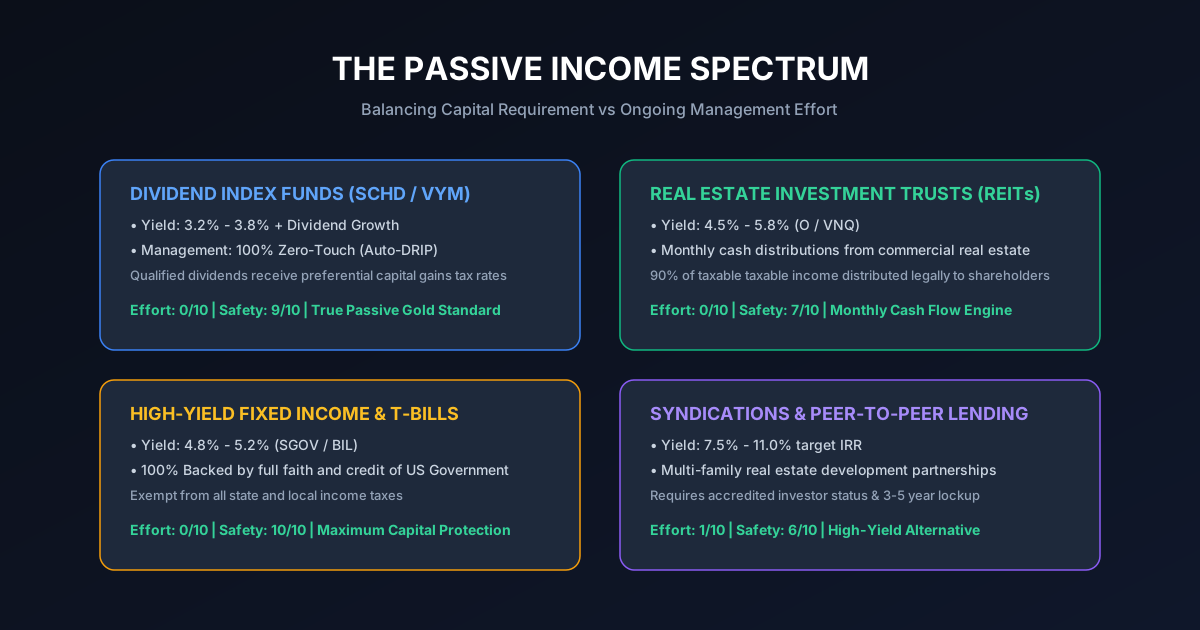
Figure 1: The passive income spectrum categorizing cash flow vehicles by initial capital requirements versus ongoing maintenance and management requirements.
Before selecting a passive income model, you must evaluate your starting balance sheet. You cannot generate meaningful financial yield from a small capital base without first deploying sweat equity:
$$\text{Annual Passive Yield} = \text{Invested Capital} \times \text{Yield Percentage}$$
- If you have $500 to invest: Placing $500 into a premier High-Yield Savings Account or Dividend ETF yielding 5.00% APY generates exactly $25.00 per year ($2.08 per month). While mathematically sound, $2.08 per month will not change your life.
- To earn $1,000 per month ($12,000/year) purely passively from financial assets:
- At a 4.00% safe withdrawal rate: You need $300,000 in invested capital.
- At a 5.00% dividend yield: You need $240,000 in invested capital.
flowchart TD
    Phase1["Phase 1: Zero Capital / High Sweat Equity"] --> Build["Build Digital Assets & High-Margin Cash Flow ($500 - $3,000/mo)"]
    Build --> Phase2["Phase 2: Funnel Profits into Financial Assets (VOO, SCHD, REITs)"]
    Phase2 --> Phase3["Phase 3: Pure Financial Independence ($300k+ Capital Base Generating Pure Yield)"]
If you do not already possess $250,000+ in liquid cash, your primary focus must be Phase 1: Digital Asset Leverage—building high-margin digital workflows and publishing properties with under $500 in startup capital, and systematically sweeping the profits into dividend-growing financial assets.
2. Stream 1: Broad-Market Dividend Growth ETFs (SCHD, VYM, VOO)
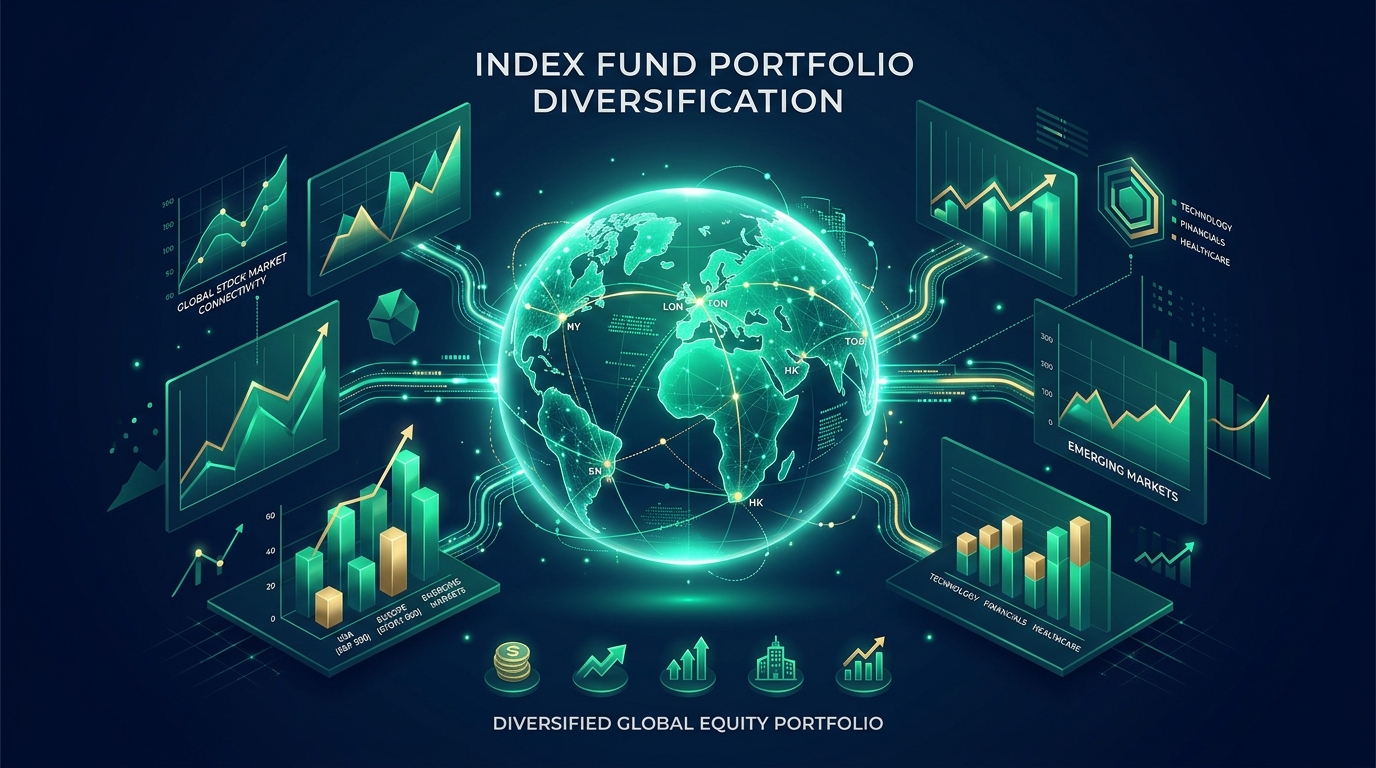 Figure 2: Generating automated cash distributions through globally diversified corporate equities and qualified dividend payout structures.
For pure, zero-maintenance passive income where you never manage employees, customers, or code, nothing surpasses Dividend Growth Exchange-Traded Funds (ETFs).
Unlike speculative yield-trap individual stocks paying unsustainable 12% dividends, dividend growth funds hold hundreds of highly profitable corporations that possess decades-long track records of consistently raising their cash dividend distributions.
Flagship Dividend ETFs Compared:
| Fund Ticker | Benchmark Philosophy | Dividend Yield (Typical) | 5-Year Dividend Growth Rate | Expense Ratio | Top Holdings |
|---|---|---|---|---|---|
| Schwab US Dividend Equity (SCHD) | 100 high-yielding, financially healthy US companies | 3.40% - 3.80% | 11.2% / year | 0.06% | Broadcom, Home Depot, AbbVie, Texas Instruments |
| Vanguard High Dividend Yield (VYM) | Broad-market high dividend yield index | 2.90% - 3.20% | 7.1% / year | 0.06% | JPMorgan Chase, ExxonMobil, Johnson & Johnson |
| Vanguard S&P 500 ETF (VOO) | Core 500 US large-cap equities (Total Return) | 1.40% - 1.60% | 6.5% / year | 0.03% | Microsoft, Apple, NVIDIA, Amazon, Alphabet |
The Power of "Yield on Cost"
The magic of dividend growth investing is that as corporations grow their quarterly cash payouts, your effective return on your original investment capital expands:
- If you purchase shares of a dividend growth ETF yielding 3.5% today, and the underlying companies expand their dividends by 8% annually, in 10 years your effective yield on your original purchase price exceeds 7.5%.
- Enrolling in Automatic Dividend Reinvestment (DRIP) allows your quarterly dividend checks to automatically buy additional fractional shares, triggering an accelerating compound loop.
3. Stream 2: Digital Knowledge Assets & Template Micro-Systems
The single highest-leverage passive income model for individuals with under $500 in startup capital is the creation of Digital Software Templates and Reusable Assets.
Why Digital Products Beat Physical eCommerce:
- Zero Inventory Risk: You never purchase inventory, rent warehouse space, or deal with supply chain delays.
- Zero Shipping Fees: Fulfilled instantaneously and automatically via digital download links.
- 95%+ Gross Profit Margins: Once engineered, your cost to deliver the 1,000th unit is $0.00.
flowchart LR
    Create["Step 1: Build Once (Notion/Airtable/Excel System)"] --> Store["Step 2: List on Digital Storefront (Gumroad / Stripe / Etsy)"]
    Store --> Traffic["Step 3: Drive Search & Organic Social Traffic"]
    Traffic --> AutoSale["Step 4: Automated Delivery & Payouts While You Sleep"]
3 High-Demand Digital Niches in 2026:
- Specialized Financial Models & Spreadsheets: Commercial real estate underwriting models, small business cash flow forecasting spreadsheets, and debt payoff trackers in Microsoft Excel and Google Sheets.
- Notion & Airtable Workflow Operating Systems: Freelance agency client project portals, content editorial calendars, and solopreneur CRM databases ($39 to $97 per copy).
- Design Asset Component Libraries: Specialized Figma UI component design kits, Tailwind CSS website templates, and Canva social asset bundles for specific vertical industries.
4. Stream 3: Public Real Estate Investment Trusts (REITs)
Physical real estate investing is frequently advertised as "passive income." In reality, owning physical rental properties is an active, demanding business involving tenant screening, late-night emergency plumbing repairs, eviction filings, and property maintenance.
If you desire the economic benefits of real estate (contractual rental cash flow, inflation protection) without the headaches of physical management, invest in Publicly Traded Real Estate Investment Trusts (REITs).
The Federal REIT Tax Structure (IRC § 856)
Under federal tax law, an entity qualifying as a REIT pays zero federal corporate income taxes, provided it fulfills a strict statutory mandate:
- It must distribute at least 90% of its taxable income directly to shareholders in the form of annual cash dividends.
Premier Institutional REIT Sectors:
- Digital Infrastructure & Data Centers (e.g., Equinix - EQIX, Digital Realty - DLR): Owns the secure facilities housing the cloud servers and artificial intelligence computing clusters powering modern global enterprise.
- Industrial Logistics & Warehouses (e.g., Prologis - PLD): Owns the massive fulfillment centers leased by Amazon, FedEx, and global supply chain operators.
- Triple-Net Lease Retail (e.g., Realty Income - O "The Monthly Dividend Company"): Owns freestanding commercial real estate leased to recession-resistant corporate tenants (CVS, Walgreens, Dollar General) under "Triple-Net (NNN)" leases where the tenant pays 100% of property taxes, building insurance, and maintenance.
5. Stream 4: Programmatic Authority Publishing & Digital Media
Building a high-traffic niche digital publishing property—such as The Finance Wave—represents one of the most asymmetric assets in the modern digital economy.
How Niche Digital Publishing Generates Passive Cash Flow:
- Programmatic Ad Networks: Advertisers pay you on a CPM (Cost per Thousand Impressions) model simply for displaying targeted banner and native advertisements to visitors. In high-value niches like finance, CPMs range from $15.00 to $45.00+ per 1,000 pageviews.
- Performance Affiliate Partnerships: Financial institutions (banks, brokerages, credit monitoring services) pay referral commissions ($25 to $150+ per verified user) when readers click through your educational guides to open accounts.
- Direct Corporate Sponsorships: Once a publication establishes organic search authority and newsletter subscribers, industry brands pay $500 to $5,000+ for direct newsletter mentions and sponsored analysis.
The Economics of 1,000 Daily Readers:
If a publication generates an average of 3,000 pageviews per day (90,000 views/month) with a blended advertising and affiliate revenue per thousand impressions (RPM) of $30.00: $$\text{Monthly Passive Revenue} = \frac{90,000}{1,000} \times $30.00 = \mathbf{$2,700 / \text{month}}$$
6. Stream 5: Fixed Income & US Treasury Ladders
For individuals with low risk tolerance who require guaranteed capital preservation alongside predictable cash flow, modern fixed-income yields offer the highest returns seen in nearly two decades.
- 4-Week to 26-Week US Treasury Bills: Yielding 4.75% to 5.15%, backed by the full faith and credit of the United States federal government, and 100% exempt from state and local income taxes.
- High-Yield Savings Accounts (HYSAs): Paying 4.50% to 5.05% APY with zero lockup periods, daily compounding, and full $250,000 FDIC insurance protection.
7. Comparative Analysis: Passive Income Models Evaluated
| Model | Startup Capital | Initial Effort Required | Ongoing Labor | Cash Flow Velocity | True Passivity Rating |
|---|---|---|---|---|---|
| Dividend ETFs (SCHD/VOO) | $10 - $500 | Zero | Zero (Automated) | Moderate (Quarterly) | 100% (Pure Passive) |
| Digital Templates | $0 - $50 | High (1-2 Weeks Build) | Low (1 hr/week) | Immediate | 85% Passive |
| Public REITs (O / PLD) | $10 - $500 | Low (Brokerage trade) | Zero | High (Monthly/Qtr) | 100% (Pure Passive) |
| Digital Publishing | $50 - $100 | High (Content build) | Low (Weekly upkeep) | 3 - 6 Months | 80% Passive |
| Treasury Ladders | $100 - $1,000 | Low (Ladder setup) | Zero (Auto-reinvest) | High (Weekly/Monthly) | 100% (Pure Passive) |
8. Tax Optimization: Qualified Dividends vs. Ordinary Income
Failing to understand how the IRS taxes different passive income streams will erode your net returns:
1. Qualified Dividends (Preferential Long-Term Capital Gains Rates)
Dividends paid by domestic US corporations and qualifying foreign funds (such as VOO or SCHD) that you have held for more than 60 days during a 121-day holding window are classified as Qualified Dividends:
- Tax Rates: Taxed at preferential long-term capital gains rates of 0%, 15%, or 20%, depending on your taxable income bracket.
- Advantage: A married couple earning up to approximately $94,000 in total income pays 0% federal income tax on qualified dividends.
2. Non-Qualified (Ordinary) Dividends & Interest
- Yield earned from High-Yield Savings Accounts, CDs, and standard Real Estate Investment Trusts (REITs) is classified as ordinary income.
- It is taxed at your highest marginal federal income tax bracket (up to 37%).
- Strategy: Hold REITs and high-yield bonds inside tax-sheltered retirement accounts (Roth IRA or Traditional IRA) to eliminate current-year income tax drag.
9. The 4% Safe Withdrawal Rule vs. The Dividend Cross-Over Point
 Figure 3: Exponential growth modeling showing dividend reinvestment (DRIP) acceleration as annual distribution payouts begin outstripping initial salary contributions.
To understand when passive income grants true financial independence, you must evaluate two distinct mathematical milestones:
1. The 4% Safe Withdrawal Rule (The Trinity Study)
In 1998, three finance professors at Trinity University published a landmark study analyzing 70 years of rolling stock and bond market return data:
- The Rule: If a retiree maintains an investment portfolio of 50% to 75% broad-market equities (S&P 500) and 25% to 50% intermediate bonds, they can safely withdraw 4.00% of the initial portfolio value in Year 1, and adjust that dollar withdrawal for inflation each subsequent year, with a 95%+ statistical probability of not running out of money over a 30-year retirement.
- The "Rule of 25": To calculate how much capital you need to retire, multiply your desired annual living expenses by 25: $$\text{Target Portfolio} = \text{Annual Living Expenses} \times 25$$
- Example: If you desire $40,000/year in passive living expenses: $$40,000 \times 25 = \mathbf{$1,000,000\text{ Target Portfolio}}$.
2. The Dividend Cross-Over Point
For dividend growth investors, the Dividend Cross-Over Point is the exact calendar date when your quarterly dividend payments exceed your baseline monthly living expenses:
- You never sell a single share of stock.
- You live entirely off the corporate profit distributions (dividends) generated by companies like Microsoft, Procter & Gamble, and JPMorgan Chase, leaving 100% of your underlying capital shares intact to compound for your heirs.
The 20-Year Dividend Snowball Simulation
Consider an investor who deposits $10,000 upfront and contributes $500 per month into a dividend growth ETF (such as SCHD) with a 3.5% starting yield, 7% annual dividend growth, and 7% annual price appreciation:
| Time Horizon | Capital Contributed | Annual Dividend Income (No DRIP) | Annual Dividend Income (With DRIP Reinvestment) | The Reinvestment Advantage |
|---|---|---|---|---|
| Year 5 | $40,000 | $1,840 / year | $2,110 / year | +$270 / year |
| Year 10 | $70,000 | $4,580 / year | $6,140 / year | +$1,560 / year |
| Year 15 | $100,000 | $9,420 / year | $15,280 / year | +$5,860 / year |
| Year 20 | $130,000 | $17,890 / year | $34,650 / year | +$16,760 / year Extra Free Cash |
Key Financial Takeaway: Notice that by Year 20, enrolling in automated dividend reinvestment (DRIP) doubles your annual passive income from $17,890 to over $34,650 annually. Compounding dividends create an unstoppable exponential curve.
10. The $0 to $1,000/Month Passive Income Roadmap
Here is the exact step-by-step roadmap to scale your passive cash flow from zero to four figures monthly:
Phase 1 (Months 1 to 3): The Foundation & First $50/Month
- Open a High-Yield Savings Account and deposit your emergency fund to capture an immediate $25 to $50/month in risk-free compound interest.
- Engineer your first specialized digital spreadsheet or Notion template tool. List it on Gumroad or Etsy.
Phase 2 (Months 4 to 8): Scaling Digital Sales to $500/Month
- Create educational content, short video tutorials, or organic articles demonstrating how your digital tool solves a painful workflow problem.
- Scale sales to 10 to 15 copies per month ($500/month in net cash flow).
Phase 3 (Months 9 to 18): The Compounding Flywheel ($1,000+/Month)
- Funnel 100% of your digital product cash flow directly into Dividend Growth ETFs (SCHD/VOO) and public REITs.
- Reinvest all dividends automatically via DRIP.
- Your monthly cash flow from digital sales ($700) combined with accumulated financial dividend yield ($300) crosses the $1,000/month milestone, creating a self-sustaining financial flywheel that compounds for life.
10. Comprehensive Frequently Asked Questions (FAQ)
Can I live off passive income with $10,000 in savings?
No. At a sustainable 5% yield, $10,000 generates $500 per year ($41.66 per month). To replace a full-time living purely from investment yield, you require a substantial capital base. However, you can use that $10,000 as a safety cushion to build a digital asset or business model that generates $2,000+ per month within 12 months.
Are peer-to-peer (P2P) lending platforms a good passive income source?
Generally no. P2P lending platforms (such as Prosper or LendingClub notes) expose investors to unsecured consumer credit default risk. During economic downturns, default rates surge, wiping out net returns. Furthermore, P2P interest is taxed as ordinary income without preferential rates, making broad-market dividend index funds far superior on a risk-adjusted basis.
What is the safest passive income stream in the world?
The safest passive income instrument is short-term US Treasury Bills (T-Bills) backed by the direct sovereign taxing authority of the United States government. T-Bills have zero credit default risk, maintain near-zero price volatility when held to maturity, provide state-tax exemption, and currently yield competitive rates near 5%.