How to Cut Your Grocery Bill by 40% Without Sacrificing Nutrition
Practical strategies to lower household grocery costs during inflation. Learn unit price math, store brand equivalents, bulk buying tactics, and meal prep economics.
Food expenses represent the most volatile, rapidly compounding variable line item in the modern household budget. According to Bureau of Labor Statistics (BLS) Consumer Price Index (CPI) datasets, the Food-at-Home Index has surged by more than 28% over the past four years, with staple grocery essentials—eggs, dairy, beef, poultry, and fresh produce—consistently outstripping general core inflation metrics.
According to USDA household expenditure surveys, the average American family of four spends between $1,100 and $1,650 every single month on groceries and food supplies, with single individuals spending upwards of $450 to $700 per month. Even worse, retail food waste studies from the Natural Resources Defense Council (NRDC) reveal that the average household throws away approximately 25% to 30% of the food they purchase, effectively tossing $3,000 to $4,500 in cold cash directly into the garbage can every year.
Slashing your grocery expenses does not require surviving on low-nutrient instant ramen noodles or giving up organic produce. By understanding retail supermarket behavioral psychology, mastering unit-price economics, leveraging private-label co-manufacturing agreements, and engineering high-protein bulk meal architectures, you can comfortably slash your monthly grocery bill by 35% to 50%.
Below, we analyze the macroeconomic drivers of food inflation, supermarket layout traps, protein-cost matrices, batch preparation economics, and a 30-day tactical implementation roadmap.
1. The Supermarket Psychological Trap: Deconstructing Store Architecture
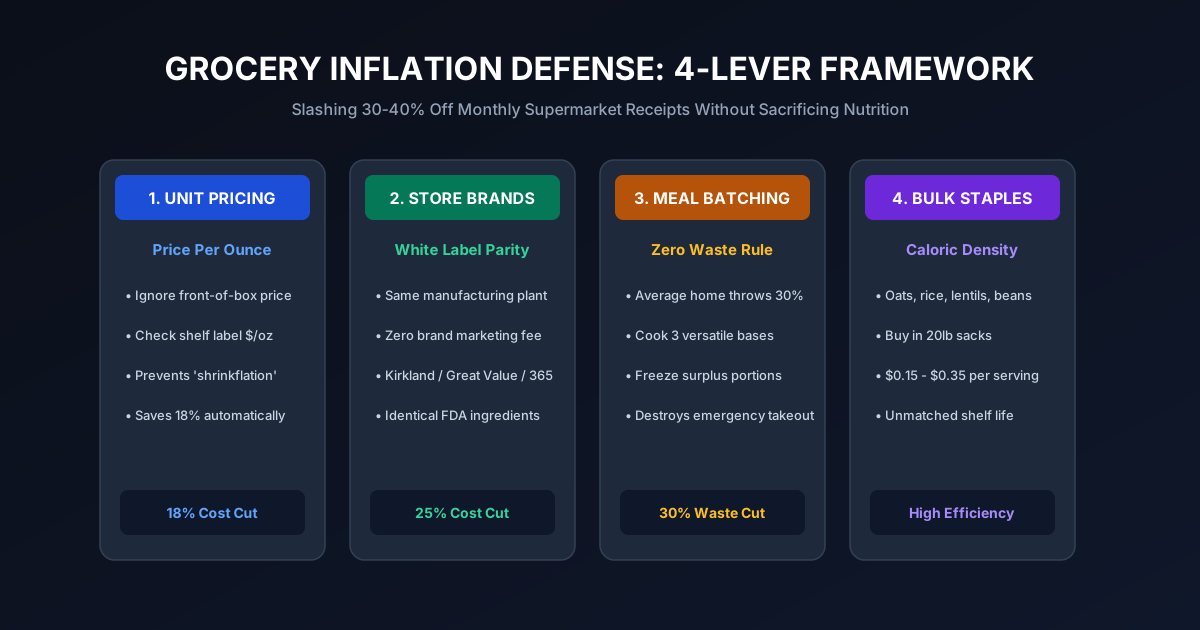
Figure 1: The 4-lever tactical grocery defense architecture: unit-price calculation, private label store brand adoption, strategic meal batching, and bulk whole staple purchasing.
Modern retail supermarkets are not designed for your convenience; they are precision-engineered commercial casinos designed by behavioral consumer psychologists to maximize dwell time, impulse purchases, and basket size.
flowchart TD
    Store["Supermarket Floorplan Engineering"] --> P["Perimeter Anchor: Produce, Dairy, Meat at Far Opposite Corners"]
    Store --> E["Eye-Level Placement: Brands Pay 'Slotting Fees' to Sit at 4-5 Feet"]
    Store --> End["Endcap Trap: Bold Signage Creating False Perception of a Sale"]
    Store --> C["Checkout Chokepoint: High-Margin Impulse Candy, Magazines, Gum"]
1. The Forced Perimeter Maze
Notice where the foundational nutritional essentials are located in nearly every commercial grocery store:
- Fresh produce is at the entrance to establish a psychological "health halo" (making you feel virtuous so you justify buying junk food later).
- Fresh milk and eggs are placed at the furthest rear corner of the store.
- Fresh meats and bakery counters are placed along the far perimeter walls.
To obtain the four items you came for (milk, eggs, chicken, spinach), the floorplan forces you to walk through hundreds of feet of center aisles stocked with high-margin, ultra-processed packaged goods.
2. The "Eye-Level is Buy-Level" Rule & Slotting Fees
Food conglomerates (such as Kraft Heinz, General Mills, and Nestlé) pay supermarkets billions of dollars in contractual "Slotting Fees" to guarantee their products sit on shelves between 4 feet and 5.5 feet off the ground—the direct visual sightline of an adult consumer.
- The Bottom Shelf: Bargain bulk staples (such as 25 lb bags of rice, store-brand oats, and institutional dried beans) are placed on the bottom shelf near the floor.
- The Top Shelf: Niche gourmet brands are placed on the top shelf.
- The Middle Shelf: The most expensive, high-margin, name-brand processed foods sit directly at eye level.
The Actionable Rule: Always look at the bottom two shelves first. The bottom shelf frequently holds products that are identical in nutritional value but 40% to 60% cheaper per ounce than eye-level items.
3. The "Endcap" Illusion
The displays at the ends of aisles ("endcaps") feature bold, bright promotional signage that creates the subconscious impression of a discount. In reality, retail audits indicate that more than 45% of endcap products are sold at full retail price or carry modest temporary markdowns subsidized by food manufacturers to stimulate impulse volume. Never purchase from an endcap without checking the permanent aisle shelf price.
2. Unit-Price Mathematics: Overcoming Package Shrinkflation
Modern food conglomerates battle inflation using a deceptive strategy known as Shrinkflation: reducing the physical volume or net weight of a product while keeping the retail packaging and sticker price identical.
A cereal box that formerly contained 18 ounces now contains 14.2 ounces, yet the box maintains the same front-facing height and width.
The Antidote: Calculating Price per Unit
Never compare items by their nominal sticker price ($4.99 vs. $5.49). Always evaluate the small Unit Price printed on the upper or lower corner of the shelf label:
$$\text{Unit Price} = \frac{\text{Total Retail Sticker Price}}{\text{Total Net Ounces (or Grams)}}$$
| Product Option | Sticker Price | Net Weight | True Unit Price (Per Ounce) | Real Cost Evaluation |
|---|---|---|---|---|
| Option A (Brand Name "Sale") | $4.79 | 12 oz | $0.399 / oz | Looks cheaper upfront, but 33% more expensive! |
| Option B (Store Brand Standard) | $5.99 | 20 oz | $0.299 / oz | Higher upfront sticker price, but 25% cheaper per unit |
| Option C (Club Pack Bulk Size) | $11.49 | 48 oz | $0.239 / oz | 40% savings over Option A |
By training your eyes to look strictly at the Price per Ounce ($/oz) or Price per Pound ($/lb), you instantly neutralize shrinkflation and marketing gimmicks.
3. The Private-Label Reality: Store Brand Co-Packing Secrets
One of the most persistent myths among grocery shoppers is that store-brand products (such as Kirkland Signature, Great Value, 365 Whole Foods, or Kroger Brand) are nutritionally inferior to name brands.
In modern industrial food manufacturing, the reality is defined by Co-Packing Agreements:
flowchart TD
    Factory["Single Certified Commercial Food Processing Plant"] --> Line1["Packaging Line A -> Canned Brand Name ($3.49)"]
    Factory --> Line2["Packaging Line B -> Canned Store Brand ($1.89)"]
    Line1 --> Result["Identical Food, Identical Source, 45% Price Markup for Advertising"]
Major food manufacturing plants operate with massive fixed overhead. To operate at 100% capacity, name-brand food processors sign commercial contracts with grocery chains to bottle or package the exact same food under the private-label store brand.
- Canned Tomatoes, Broth & Vegetables: Often harvested from the exact same agricultural co-ops and canned on the exact same production lines.
- Dairy, Butter & Milk: Milk is regionally regulated. The store-brand gallon of whole milk is typically pasteurized and bottled at the exact same regional dairy facility as the premium name brand sitting next to it.
- Over-the-Counter Medicine & Ibuprofen: Regulated by the FDA. Federal law mandates that store-brand generic ibuprofen or allergy medication must contain the exact same active pharmaceutical ingredient, dosage, and bioequivalence as Advil or Claritin, at a 60% lower price point.
The 80/20 Private-Label Strategy
Switch all basic commodity ingredients (flour, sugar, salt, oats, rice, canned beans, frozen vegetables, spices, oil, butter, milk, and over-the-counter medicine) to the store brand. Reserve premium name brands exclusively for the 2 to 3 specialty items where you have a verified, genuine taste preference.
4. The High-Protein Cost-per-Gram Matrix
Protein is consistently the most expensive macronutrient on the grocery receipt. Many households overspend by hundreds of dollars each month by relying exclusively on expensive cuts of animal protein (such as ribeye steaks, organic chicken breasts, and pre-cooked deli meats).
To optimize your nutritional budget, evaluate protein sources using the Cost-per-Gram of Complete Protein Matrix:
| Protein Source | Typical Market Price | Protein per Serving | Cost per 30g Complete Protein | Annual Cost (Daily 100g Intake) |
|---|---|---|---|---|
| Dried Lentils & Chickpeas | $1.49 / lb | 24g / cup | $0.38 | $462 / year |
| Whole Eggs (Grade A Large) | $2.89 / dozen | 12g (2 eggs) | $0.72 | $876 / year |
| Cottage Cheese (Store Brand) | $2.49 / 16 oz | 28g / cup | $0.95 | $1,155 / year |
| Pork Loin / Pork Shoulder | $2.49 / lb | 26g / 4 oz | $1.10 | $1,338 / year |
| Canned Tuna (Chunk Light) | $1.19 / can | 30g / can | $1.19 | $1,447 / year |
| Bone-in Chicken Thighs | $2.19 / lb | 24g / 4 oz | $1.25 | $1,520 / year |
| Boneless Chicken Breasts | $3.99 / lb | 31g / 4 oz | $1.85 | $2,250 / year |
| Lean Ground Beef (90/10) | $6.49 / lb | 22g / 4 oz | $2.95 | $3,589 / year |
| Pre-Packaged Deli Turkey | $9.99 / lb | 20g / 4 oz | $4.15 | $5,049 / year |
| Prime Ribeye Steak | $16.99 / lb | 24g / 4 oz | $6.80 | $8,273 / year |
The "Protein Stacking" Blueprint
You do not have to become a vegetarian to save money. Deploy Protein Stacking:
- When cooking ground meat recipes (chili, taco filling, pasta bolognese, shepherd's pie), use a 50/50 ratio of ground beef or turkey blended with cooked black beans or cooked brown lentils.
- Lentils match the texture and absorb the seasoning of the meat perfectly.
- The Result: Cuts the cost of the protein base in half, doubles the dietary fiber, lowers saturated fat, and remains completely delicious.
5. The Economics of Batch Preparation vs. Restaurant Food Delivery
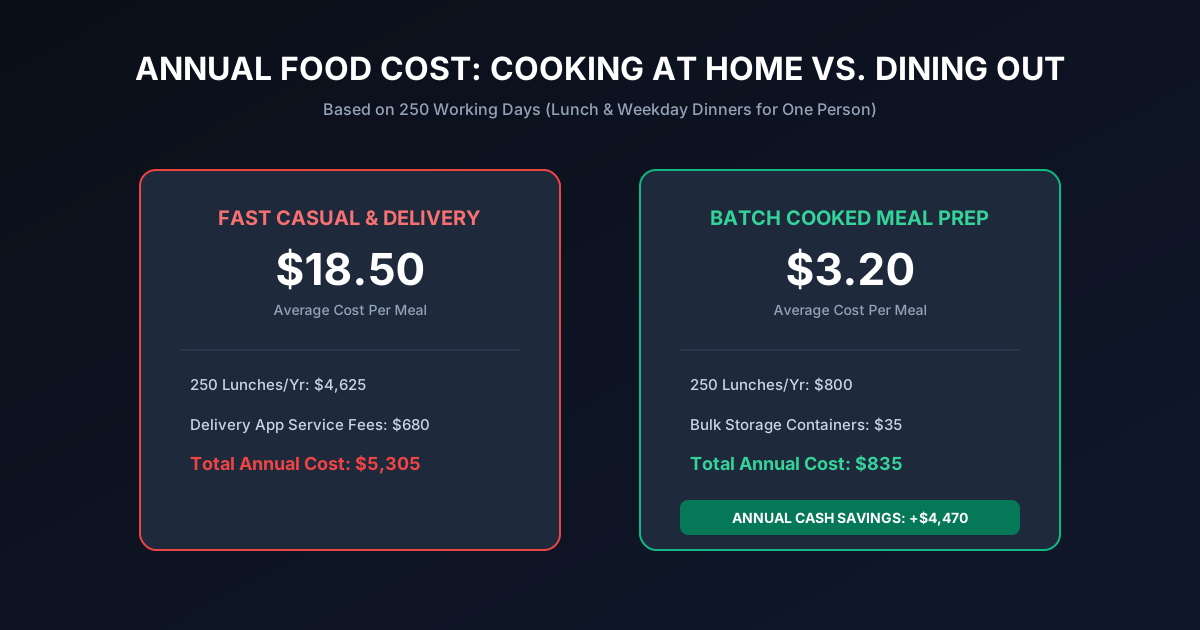 Figure 2: Annual cash flow comparison between restaurant food delivery ($18.50/meal) and high-protein batch cooking at home ($3.20/meal), producing $4,470 in annual net savings.
To understand the immense cash flow leverage of grocery mastery, compare the unit economics of a prepared meal across three dining channels:
Cost Breakdown for a Standard 600-Calorie High-Protein Meal:
├── Delivery App (DoorDash/UberEats) -> $22.50 (Meal + Service Fees + Tip + Delivery)
├── Casual Fast-Food (Chipotle/Panera) -> $14.50 (Entree + Beverage + Tax)
└── Homemade Batch Meal Prep        -> $2.45 (Bulk Chicken, Jasmine Rice, Broccoli)
The 1-Year Wealth Differential
Consider an individual who orders takeout delivery 5 times per week versus preparing simple batch meals at home:
- Takeout Delivery (5 meals/wk @ $22.50): $$112.50/\text{week} \implies \mathbf{$5,850/\text{year}}$
- Batch Home Prep (5 meals/wk @ $2.45): $$12.25/\text{week} \implies \mathbf{$637/\text{year}}$
- Net Annual Cash Saved: $\mathbf{+$5,213\text{ Cash Diverted to Investments}}$
If that $5,213 annual savings is invested into a low-cost S&P 500 index fund compounding at 8% over 10 years, it accumulates to over $81,000. Learning to cook four simple batch meals is one of the highest-ROI financial skills an individual can master.
6. The "Pantry First" Inventory Audit
The root cause of grocery budget overruns is purchasing new ingredients while existing groceries spoil in the back of the refrigerator.
Implement the Sunday Pantry-First Protocol:
- Before drafting a grocery list, open your freezer and pantry.
- Identify items that must be consumed this week (opened sauces, frozen meats, root vegetables, opened grains).
- Plan 3 to 4 meals structured around utilizing those existing inventory items first.
- Only add supplemental ingredients to your grocery list that complete those base meals.
The "First In, First Out" (FIFO) Refrigerator Rule
Commercial restaurant kitchens operate under strict FIFO standards. When unpacking fresh groceries, slide older produce and dairy items to the front of the refrigerator shelf, and place newly purchased items at the back. This ensures older ingredients are consumed before they spoil.
7. The 30-Day Tactical Grocery Budget Roadmap
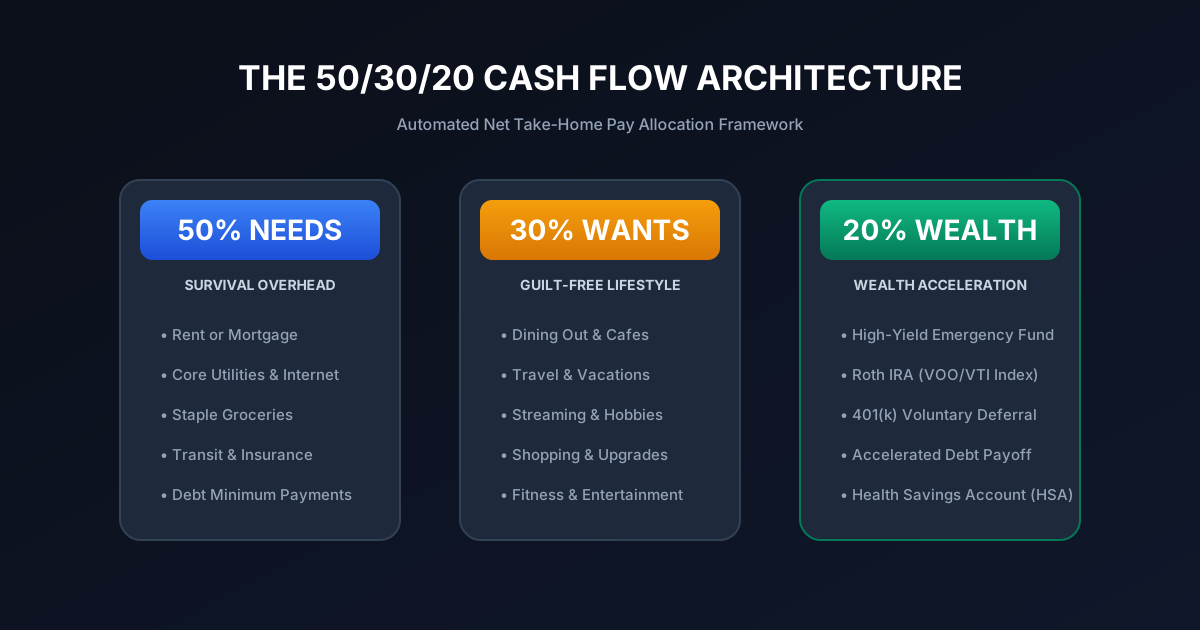 Figure 3: Integrating grocery spending strictly within the 50% "Needs" pillar of the 50/30/20 budget framework, separating genuine nutritional staples from discretionary dining.
Week 1: Receipt Audit & Inventory Baseline
- Keep every receipt from this week's food shopping.
- Calculate your household's baseline weekly food spend.
- Conduct a complete pantry, freezer, and refrigerator cleanout.
Week 2: Implement Unit-Price & Private-Label Swaps
- Swap all baking staples, canned goods, dairy, and spices to the store brand.
- Practice reading the small unit price ($/oz) on every item placed in the cart.
- Never enter the supermarket without a strict, written list.
Week 3: Deploy Protein Stacking & Bulk Staple Sourcing
- Incorporate lentils, black beans, or chickpeas into at least two ground meat meals.
- Source staple carbohydrates (jasmine rice, rolled oats, dried pasta) in bulk sizes.
Week 4: Measure Savings & Lock In Sinking Funds
- Compare this month's total grocery spending against your historical baseline.
- Immediately sweep the saved cash ($300 to $600+) into your High-Yield Savings Emergency Fund.
8. Digital Coupon Arbitrage & Cashback Optimization
Modern supermarket chains have replaced traditional paper clipping with digital app-based loyalty ecosystems. Stacking these tools creates an additional 10% to 15% discount on top of sale prices:
The 3-Layer Digital Stacking Protocol
- Layer 1: Store Digital App Coupons: Download your primary grocer's mobile app (Kroger, Safeway, HEB, Meijer, Target Circle). Before shopping, click to "clip" digital manufacturer coupons directly to your phone number or loyalty card. These deduct automatically at checkout.
- Layer 2: Receipt Scanning Cashback Apps (Ibotta & Fetch Rewards): After checkout, photograph your physical receipt using Ibotta or Fetch. These platforms partner directly with consumer brands to deposit cash directly into your PayPal or bank account ($1.00 to $3.00 per eligible item).
- Layer 3: Categorized Grocery Credit Card Rewards: Pay with a credit card offering accelerated grocery cash-back tiers (such as the American Express Blue Cash Preferred at 6% cash back on groceries up to $6,000 annually, or the Capital One Savor at 3%).
- The Math: On a $600 monthly grocery budget, a 6% cash-back card returns $432 in tax-free cash back annually for groceries you were already buying.
9. Sample 7-Day High-Protein Budget Meal Plan (Cross-Ingredient Matrix)
The secret to keeping grocery bills under $65 per person per week is cross-utilizing ingredients across multiple recipes to ensure zero waste:
- Primary Bulk Base Ingredients: 5 lbs bone-in chicken thighs ($10.95), 2 lbs brown lentils ($2.98), 5 lbs jasmine rice ($4.49), 2 dozen eggs ($5.78), 2 bags frozen broccoli ($2.50), 3 lbs sweet potatoes ($3.29), 2 cans crushed tomatoes ($2.38).
The Meal Rotation:
- Monday / Tuesday: Slow-cooker chicken curry with lentils, jasmine rice, and steamed broccoli.
- Wednesday / Thursday: Baked seasoned chicken thighs over roasted sweet potato wedges and a fried egg bowl.
- Friday / Saturday: Hearty Mediterranean lentil and tomato stew with toasted sourdough.
- Sunday (Pantry Cleanout Frittata): Whisk remaining eggs with leftover diced chicken, roasted sweet potatoes, and broccoli florets into a high-protein baked frittata.
10. Comprehensive Frequently Asked Questions (FAQ)
Is it worth paying for a wholesale club membership (Costco / Sam's Club)?
Yes, for specific high-volume staples. An annual membership ($60 to $65) pays for itself if you regularly purchase shelf-stable items in bulk: olive oil, nuts, oats, paper towels, laundry detergent, eggs, and gasoline. However, wholesale clubs are dangerous for individuals who succumb to impulse buying of luxury foods, giant snack packs, or seasonal goods that spoil before consumption.
Should I always buy organic produce?
Not necessarily. Utilize the "Clean Fifteen" and "Dirty Dozen" benchmarks. The Environmental Working Group (EWG) publishes an annual analysis of pesticide residues on produce:
- The Clean Fifteen (Safe to Buy Conventional): Avocados, sweet corn, pineapples, onions, papayas, frozen sweet peas, asparagus, cabbage, and watermelons have thick protective rinds or low residue. Buying conventional saves 30% to 50%.
- The Dirty Dozen (Prioritize Organic if Budget Permits): Strawberries, spinach, kale, nectarines, and apples have thin skins and higher residue absorption.
How can I avoid food waste with fresh produce?
Utilize Flash-Freezing. When fresh berries, bananas, spinach, or bell peppers begin to approach peak ripeness, wash them, chop them, and place them into airtight freezer bags. Frozen berries and greens are perfect for morning smoothies, and frozen peppers are ready for stir-fries and omelets, guaranteeing zero spoilage waste.