Emergency Fund Guide: How Much Cash You Need and Where to Keep It
Calculate the exact size of your emergency fund based on your living expenses and risk factors. Learn how to divide cash across checking, high-yield savings, and T-bills.
Financial independence is not built on returns alone; it is anchored in risk management and downside protection. According to Federal Reserve consumer economic research, nearly 40% of adult Americans cannot cover an unexpected $400 emergency expense with cash, forcing them to rely on credit cards, high-interest personal loans, or family bailouts.
When an unexpected financial shock strikes—a corporate restructuring layoff, an emergency vehicle transmission failure, a high medical deductible, or a household plumbing disaster—lacking liquid cash forces you into expensive debt spirals. Even worse, individuals who keep zero liquid cash and invest 100% of their money in the stock market are frequently forced to liquidate index funds during a market crash, locking in devastating capital losses at the exact bottom of the economic cycle.
An Emergency Fund is not an investment designed to maximize capital appreciation. It is an insurance policy for your balance sheet.
Below, we break down the step-by-step formulas to determine your optimal reserve horizon, the difference between a "baseline burn rate" and lifestyle spending, the 3-tiered liquidity waterfall, and how to maximize yield without taking principal risk.
1. The Core Philosophy: Insurance, Not Investment
The primary mistake young investors make is suffering from yield envy:
"Why should I keep $20,000 in a High-Yield Savings Account earning 5.00% when the S&P 500 historically averages 10%?"
This mindset misunderstands the fundamental role of liquid capital.
- The goal of your investment portfolio is Wealth Accumulation.
- The goal of your emergency fund is Wealth Defense.
The Devastating Forced Liquidation Trap
Consider an investor who keeps zero liquid cash and invests all $25,000 into an S&P 500 ETF (VOO).
Historically, macroeconomic recessions, severe stock market crashes, and corporate unemployment layoffs occur simultaneously. In 2008 and 2020, millions of workers lost their jobs precisely when the stock market had cratered by 30% to 50%.
If you lose your job during a 35% market crash with zero cash reserves:
- You are forced to sell your index shares at a 35% discount just to pay your rent and buy groceries.
- You permanently crystallize your paper loss, eliminating future compound recovery.
- You deplete your portfolio at the worst possible mathematical moment.
An emergency fund creates a psychological and financial moat around your investment portfolio, allowing you to ride out multi-year bear markets without ever being forced to sell a single share of stock.
2. Calculating Your Baseline Monthly "Burn Rate"
Most people do not know how much money they actually need to survive for a month. When calculating an emergency fund, never use your gross salary or current monthly spending.
Instead, calculate your Baseline Monthly Burn Rate (BMBR)—the minimum non-negotiable cash required to keep your household functional during a crisis:
$$\text{BMBR} = \text{Housing} + \text{Core Utilities} + \text{Staple Food} + \text{Essential Transit} + \text{Debt Minimums} + \text{Healthcare}$$
The Burn Rate Audit: What Stays vs. What Gets Cut
| Category | Normal Spending | Emergency Burn Rate (BMBR) | Monthly Capital Saved |
|---|---|---|---|
| Rent / Mortgage | $1,800 | $1,800 (Non-negotiable) | $0 |
| Utilities & Internet | $250 | $200 (Cut premium speeds) | +$50 |
| Groceries & Food | $900 (Restaurants + Groceries) | $450 (Home cooking only) | +$450 |
| Transportation | $450 (Fuel, insurance, tolls) | $250 (Basic fuel & insurance) | +$200 |
| Subscriptions & Streaming | $120 (Netflix, Spotify, Gym) | $0 (Canceled immediately) | +$120 |
| Shopping & Entertainment | $600 (Clothing, leisure) | $0 (Frozen completely) | +$600 |
| Debt Minimum Payments | $350 | $350 (Must protect credit score) | $0 |
| Total Monthly Spend | $4,470 / month | $3,050 / month | +$1,420 / Month Cut |
Key Takeaway: Notice that while this household normally spends $4,470 per month, their true Baseline Monthly Burn Rate is only $3,050. A 6-month emergency fund for this household requires $18,300 ($3,050 \times 6), not $26,820 ($4,470 \times 6). Knowing your true burn rate makes funding your reserve far faster.
3. The Risk Multiplier Matrix: 3, 6, 9, or 12 Months?
How many months of reserves should your household hold? Do not use a generic rule of thumb. Evaluate your household against the Risk Multiplier Matrix:
Household Risk Profile Evaluation:
┌─────────────────────────┬───────────────────────┬────────────────────────┐
│ Risk Factor             │ Low Risk (3-4 Months) │ High Risk (6-12 Months)│
├─────────────────────────┼───────────────────────┼────────────────────────┤
│ 1. Income Stability     │ Dual-Income Tenured W2│ Single-Income 1099/Solo│
│ 2. Industry Volatility  │ Healthcare, Government│ Tech, Startups, Sales  │
│ 3. Dependents           │ Zero Dependents       │ Children, Elderly Care │
│ 4. Fixed Overhead       │ Renting / Low Fixed   │ High Mortgage / HOA    │
│ 5. Health Status        │ Pristine Health       │ Chronic Health Needs   │
└─────────────────────────┴───────────────────────┴────────────────────────┘
Tier 1: The 3-to-4 Month Buffer (Low-Risk Profiles)
- Who It's For: Dual-earning couples where both partners hold stable, tenured W-2 jobs in recession-resistant industries (such as healthcare, nursing, education, or government), with zero dependents and no owned real estate.
- Why: The mathematical probability of both earners suffering simultaneous involuntary terminations is low. One partner's salary can cushion baseline expenses while the other seeks re-employment.
Tier 2: The 6-Month Standard (Moderate-Risk Profiles)
- Who It's For: Single-income households, individuals working in cyclical industries (technology, banking, commercial real estate, corporate recruiting), homeowners with aging roofs/HVAC systems, and households with children.
- Why: In modern corporate environments, executive and tech hiring cycles frequently span 4 to 6 months from initial recruiter screen to final executive offer letter.
Tier 3: The 9-to-12 Month Fortress (High-Risk Profiles)
- Who It's For: 100% commission-based sales professionals, freelance contractors, small business owners, solopreneurs, and individuals within 3 to 5 years of retirement.
- Why: Business revenues fluctuate unpredictably. A 12-month liquid reserve guarantees you will never be forced to close your business or accept predatory loan terms during extended economic downturns.
4. The 3-Tier Liquidity Waterfall
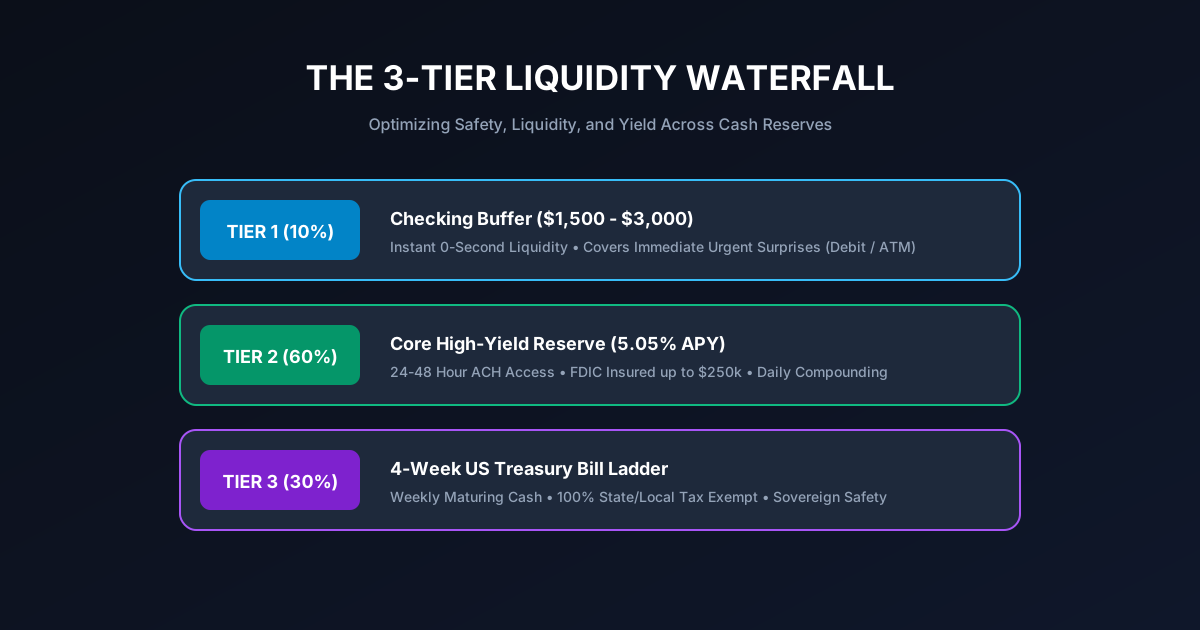
Figure 1: The 3-tier liquidity architecture: Tier 1 Checking Buffer for instant needs, Tier 2 High-Yield Savings Account (5.05% APY) for core reserves, and Tier 3 Treasury Bills for yield maximization.
Do not keep your entire emergency reserve sitting in a single account. Deploy the 3-Tier Liquidity Waterfall to optimize accessibility, safety, and yield:
flowchart TD
    Reserve["Total Emergency Reserve ($25,000 Example)"] --> Tier1["Tier 1: Immediate Buffer ($2,500) -> Primary Checking"]
    Reserve --> Tier2["Tier 2: Core Reserve ($15,000) -> High-Yield Savings Account (5.05% APY)"]
    Reserve --> Tier3["Tier 3: Secondary Fortress ($7,500) -> 4-Week US Treasury Bills (State-Tax Free)"]
    Tier1 --> Immediate["Access in 0 Seconds via Debit Card"]
    Tier2 --> Quick["Access in 24 Hours via ACH Transfer"]
    Tier3 --> Maximum["Access in 7 Days (Maturity / Liquidation)"]
Tier 1: The Immediate Checking Buffer (10% of Reserve)
- Location: Your primary checking account.
- Capital Amount: $1,500 to $3,000 (roughly 0.5 to 1 month of living expenses).
- Access Speed: Instantaneous via debit card or ATM.
- Purpose: Covers immediate, urgent surprise expenses (emergency veterinary bills, urgent car repair towing, urgent dental prescriptions) without having to wait 24 to 48 hours for bank transfers to clear.
Tier 2: The Core High-Yield Reserve (60% of Reserve)
- Location: Top-tier digital High-Yield Savings Account (e.g., Ally, Marcus, SoFi, Discover).
- Capital Amount: 60% of your total emergency fund.
- Access Speed: 1 to 2 business days via electronic ACH transfer.
- Purpose: The workhorse of your emergency fund. Compounds daily at 4.50% to 5.05% APY with full FDIC insurance, beating inflation while remaining completely liquid.
Tier 3: The Secondary Treasury Fortress (30% of Reserve)
- Location: 4-Week or 8-Week US Treasury Bills held at TreasuryDirect or a major brokerage (Fidelity, Vanguard, Schwab).
- Capital Amount: 30% of your total emergency fund.
- Access Speed: Settles upon weekly maturity or sold within 1 business day on the secondary market.
- Purpose: Maximizes after-tax yields for residents of high-tax states (CA, NY, NJ) because US Treasury interest is 100% exempt from all state and local income taxes.
5. What Qualifies as a Real Emergency?
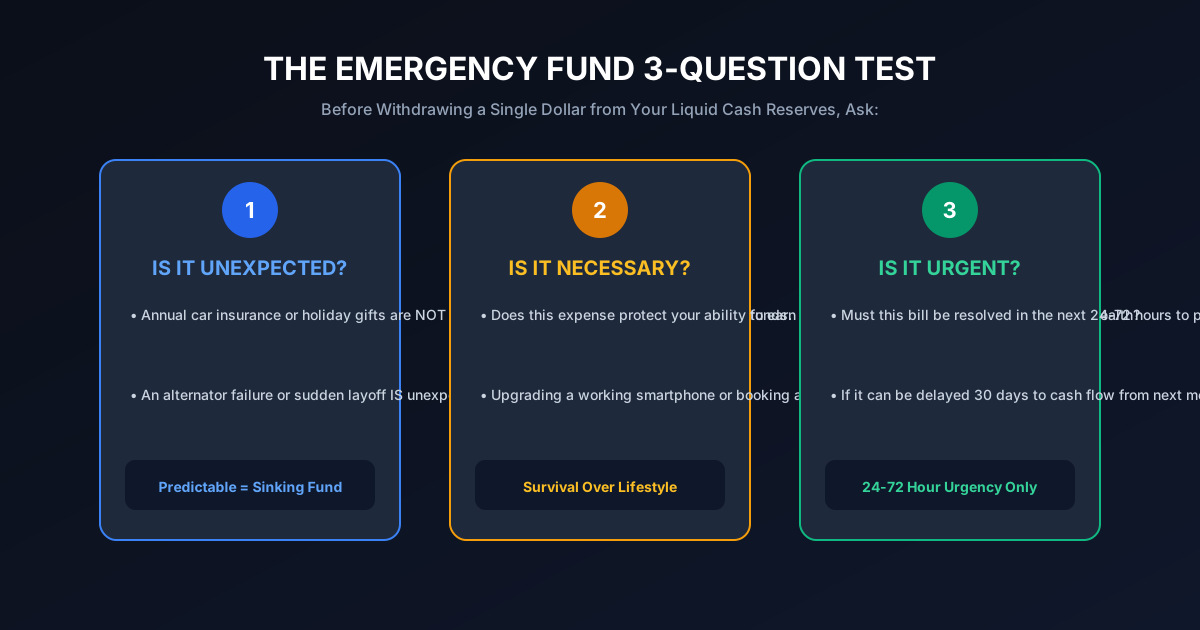 Figure 2: The 3-step decision filter to qualify true financial emergencies (Unexpected, Necessary, Urgent) before liquidating any safety cushion capital.
Before tapping your reserve, audit the expense against the Emergency Triad:
``` The Emergency Triad Test:
- Is it Unexpected? (Not a predictable annual bill like car insurance)
- Is it Necessary? (Directly impacts survival, shelter, health, or job)
- Is it Urgent? (Cannot be delayed for 30 days until the next paycheck) ```
Real Emergencies (Authorized to Tap):
- Involuntary corporate job loss or sudden layoff.
- Urgent medical procedures, prescription copays, or dental emergencies.
- Essential vehicle breakdown required to commute to work.
- Critical home repairs (broken furnace in winter, burst water pipe, leaking roof).
- Emergency travel due to serious family illness or bereavement.
False Emergencies (Forbidden to Tap):
- Predictable semi-annual auto insurance premiums (Solution: Fund a separate Sinking Fund).
- Holiday gifts, birthdays, and wedding invitations (Solution: Budget under Wants).
- Last-minute vacation deals with friends.
- Tech gadget upgrades (new iPhone or laptop release).
- Buying stocks because the market had a "dip" (Never gamble emergency cash on equities).
6. Sinking Funds: The Secret to Protecting Your Emergency Reserve
The #1 reason emergency funds get depleted is that people confuse Emergency Expenses with Predictable Irregular Expenses.
A Sinking Fund is a designated sub-savings account set aside for an expense that you know will happen in the future, even if the exact date or cost varies:
| Sinking Fund Name | Target Amount | Monthly Contribution | Prevents Emergency Fund Depletion By: |
|---|---|---|---|
| Car Maintenance | $1,200 / year | $100 / month | Absorbing new tires, brakes, battery replacements |
| Home Maintenance | 1% of home value/yr | $300 / month | Absorbing appliance breakdowns, plumbing maintenance |
| Veterinary Sinking Fund | $600 / year | $50 / month | Absorbing annual pet shots and dental cleanings |
| Semi-Annual Auto Insurance | $800 / 6 months | $133 / month | Preventing twice-yearly cash flow shocks |
By setting up dedicated "sub-accounts" or "vaults" inside modern high-yield banks like Ally or SoFi, you can label these sinking funds separately. When your car needs new tires, you pay from your Car Sinking Fund, leaving your Core Emergency Fund 100% untouched.
7. The 5-Step Emergency Fund Accumulation Sprint
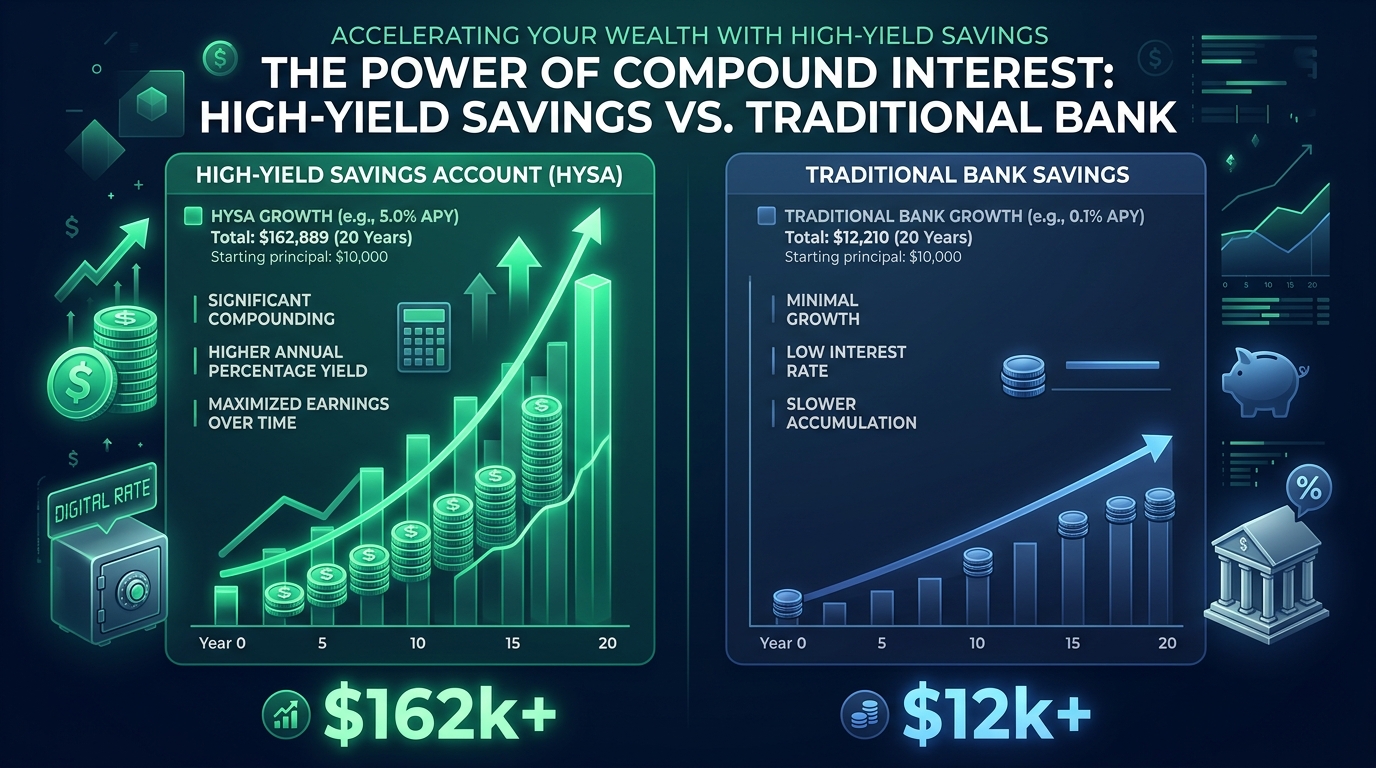 Figure 3: Compound interest trajectory of a dedicated 6-month emergency reserve deposited in a top-tier FDIC-insured high-yield savings vehicle.
Building a 6-month reserve can feel daunting if you start from zero. Break the journey down into manageable milestones:
- Milestone 1: The $1,000 Starter Buffer (Sprint: 30 Days): Sell unused household items, pause all dining out, and hoard cash until you reach a clean $1,000 in your Tier 1 buffer.
- Milestone 2: One Full Month of Burn Rate (Sprint: 60-90 Days): Provides immediate breathing room and eliminates the anxiety of living paycheck-to-paycheck.
- Milestone 3: Three Months of Burn Rate (Sprint: 6-9 Months): Protects against typical temporary employment gaps.
- Milestone 4: Six Months Fortress (Sprint: 12-18 Months): Full financial peace of mind. Your household is now bulletproof against major economic disruptions.
- Milestone 5: Automate and Lock: Once your target figure is reached, turn off transfers to the emergency fund and redirect 100% of that monthly cash flow into index funds (VOO/VTI) to accelerate wealth compounding.
8. The 4-Week US Treasury Bill Rolling Ladder
For advanced savers holding $20,000+ in Tier 3 liquid reserves, constructing a 4-Week US Treasury Bill Rolling Ladder maximizes after-tax returns while maintaining consistent weekly liquidity.
How the 4-Week Ladder Operates
- Divide your Tier 3 reserve into four equal increments (e.g., $2,500 each for a $10,000 Tier 3 allocation).
- Week 1: Purchase a 4-Week T-Bill with Increment 1 via TreasuryDirect or your brokerage, enabling the Auto-Reinvest feature.
- Week 2: Purchase a 4-Week T-Bill with Increment 2 (Auto-Reinvest).
- Week 3: Purchase a 4-Week T-Bill with Increment 3 (Auto-Reinvest).
- Week 4: Purchase a 4-Week T-Bill with Increment 4 (Auto-Reinvest).
flowchart LR
    W1["Week 1 ($2,500 Matures)"] --> R1["Reinvests or Cashes Out"]
    W2["Week 2 ($2,500 Matures)"] --> R2["Reinvests or Cashes Out"]
    W3["Week 3 ($2,500 Matures)"] --> R3["Reinvests or Cashes Out"]
    W4["Week 4 ($2,500 Matures)"] --> R4["Reinvests or Cashes Out"]
The Strategic Advantages:
- Weekly Liquidity: Once established, one-quarter of your entire Tier 3 cash matures every 7 days, providing you with fresh liquid capital every Tuesday without selling early.
- 100% State & Local Tax Free: If you live in California, New York, New Jersey, or Illinois, this ladder yields higher net cash than standard bank savings accounts.
- Sovereign Safety: Backed by the direct taxing power of the United States Treasury.
9. Real-World Case Studies: Finding the Exact Number
Case Study A: Mark (Age 29, Software Engineer in Austin, TX)
- Status: Single, renting a 1-bedroom apartment, no dependents.
- Salary: $125,000 gross.
- Monthly Spending: $4,800 total ($2,600 Needs + $2,200 Wants).
- Risk Audit:
- Tech industry hiring freezes = High industry volatility (+1 month).
- Single income with zero backup earner (+1 month).
- Renting with no home maintenance liabilities (-1 month).
- Recommended Reserve: 5 Months of Baseline Burn Rate.
- The Math: $2,600 Needs $\times 5 = \mathbf{$13,000\text{ Target Reserve}}$.
- Structure: $2,000 in Checking Buffer, $11,000 in High-Yield Savings Account.
Case Study B: Elena & Carlos (Ages 38 & 41, Suburban Ohio)
- Status: Married with two children (ages 5 & 8), homeowners with a $280,000 mortgage.
- Employment: Elena is a tenured elementary school teacher ($62,000); Carlos is an independent electrician ($78,000).
- Monthly Spending: $6,200 normal ($4,100 Needs + $2,100 Wants).
- Risk Audit:
- Elena's government/teacher income is bulletproof (Low risk).
- Carlos's 1099 electrical contracting fluctuates seasonally (High risk).
- Two young children and owned home with older roof/HVAC (High risk).
- Recommended Reserve: 6 Months of Baseline Burn Rate.
- The Math: $4,100 Needs $\times 6 = \mathbf{$24,600\text{ Target Reserve}}$.
- Structure: $2,500 in Checking, $15,000 in Core HYSA, $7,100 in 4-Week Treasury Bill Ladder.
10. Comprehensive Frequently Asked Questions (FAQ)
Can I use a Roth IRA as an emergency fund?
In theory yes, but in practice it is dangerous. Because the IRS allows you to withdraw original Roth IRA contributions tax- and penalty-free at any time, some savers view it as a backup emergency fund. However, if your emergency fund is invested in stocks inside the Roth IRA and the market drops 30%, your reserve shrinks. Furthermore, once you withdraw contributions from a Roth IRA, you cannot easily put them back in after 60 days, permanently forfeiting valuable tax-sheltered compounding space. Always maintain a true, separate cash emergency fund.
Does an emergency fund lose value to inflation?
Yes, gradually. Even in a 5.00% High-Yield Savings Account, after-tax real returns hover close to zero during inflationary periods. However, you do not hold an emergency fund to beat inflation; you hold it to prevent catastrophic financial ruin. The cost of inflation on a $20,000 reserve is trivial compared to the cost of paying 25% credit card interest or liquidating investments during a market collapse.
What should I do after I use money from my emergency fund?
The moment you tap your emergency reserve, your financial priorities immediately freeze. Temporarily halt extra retirement contributions beyond the company match, pause discretionary vacations and dining out, and channel all monthly cash flow toward replenishing the emergency fund back to its original target. Once the fortress is rebuilt, resume your normal investing roadmap.